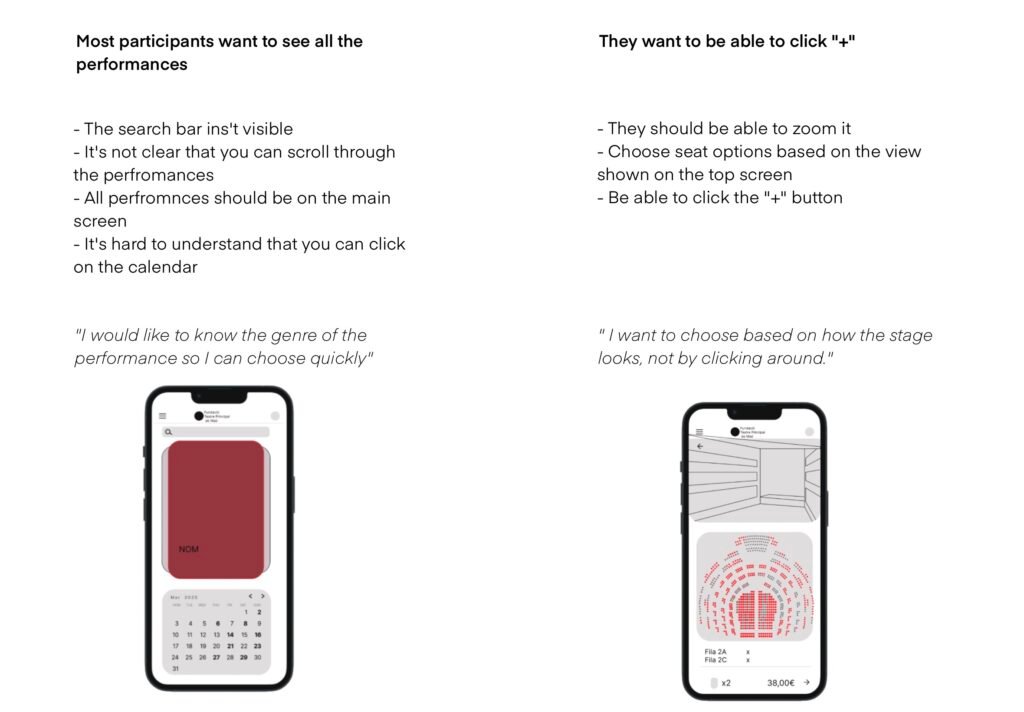
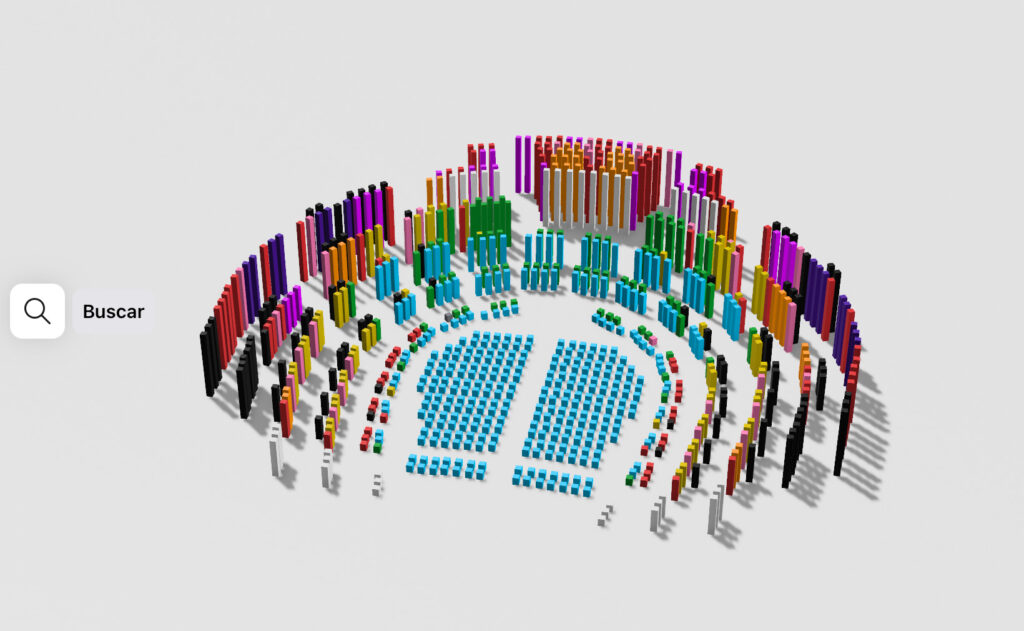
Some of the users’ comments were: «It’s easy to choose a seat once you’ve been to the theatre a few times and know how things look,» «You never know what you’re going to get when you buy the tickets.»
The problem statements were:
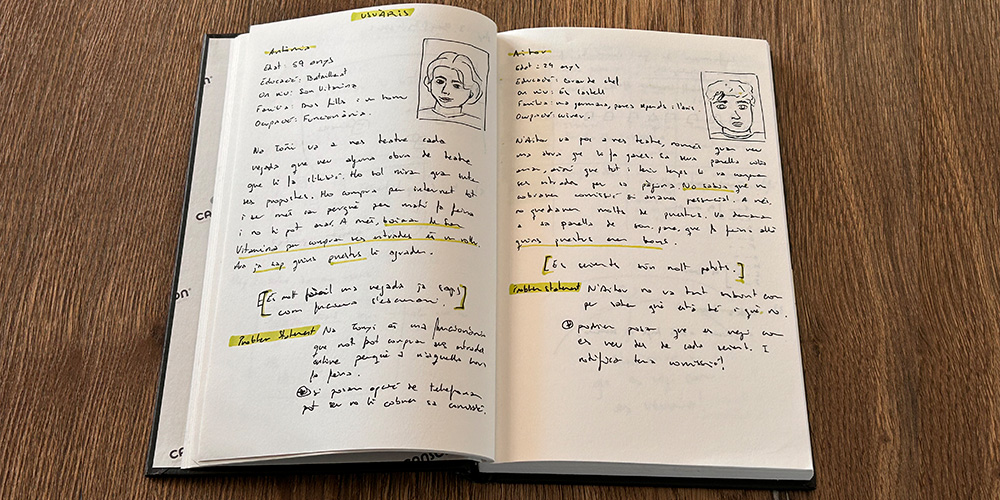
Toñi is a civil servant who cannot buy her tickets in person because she works during those hours, and in the end, she always ends up buying the same seat so she can be sure she’ll see well.
Aitor is a chef that hardly ever goes to the theatre and doesn’t know which seats he likes or dislikes. Also, he is charged a commission for buying tickets online, and he is not informed of this at any point.
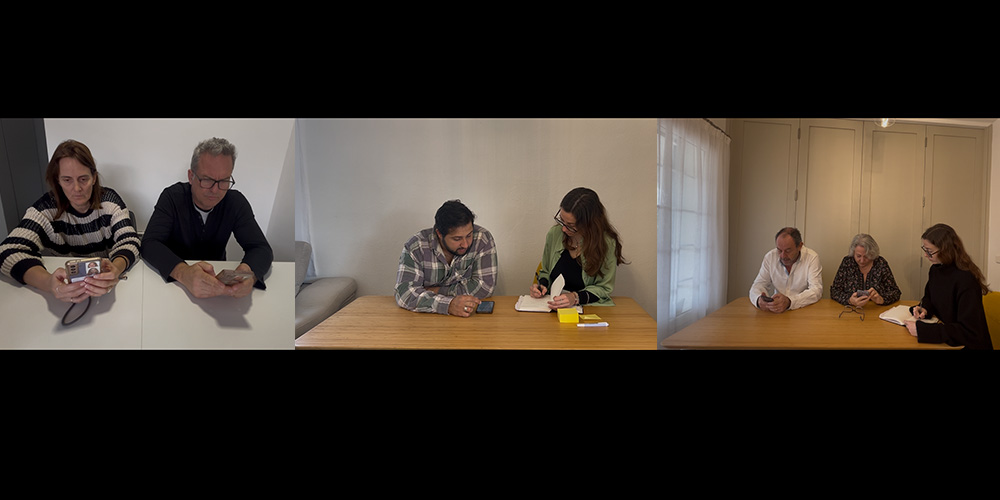
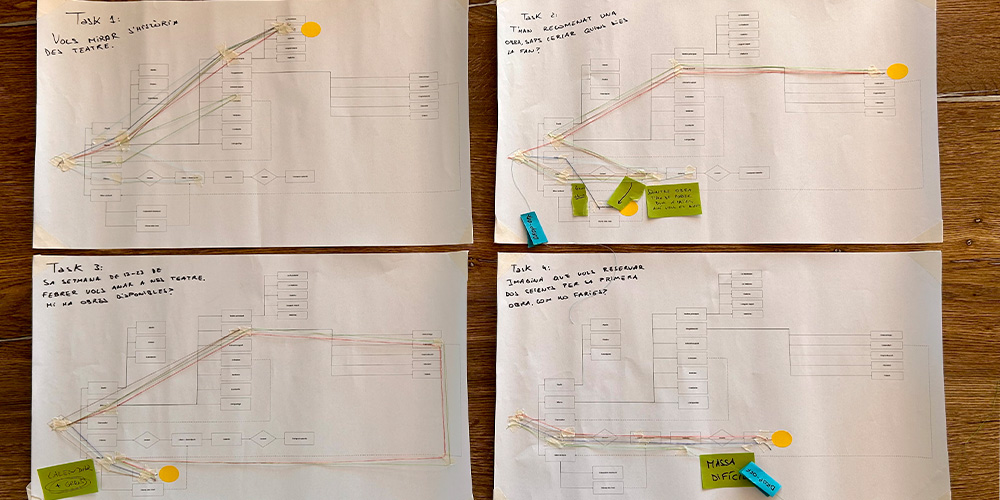
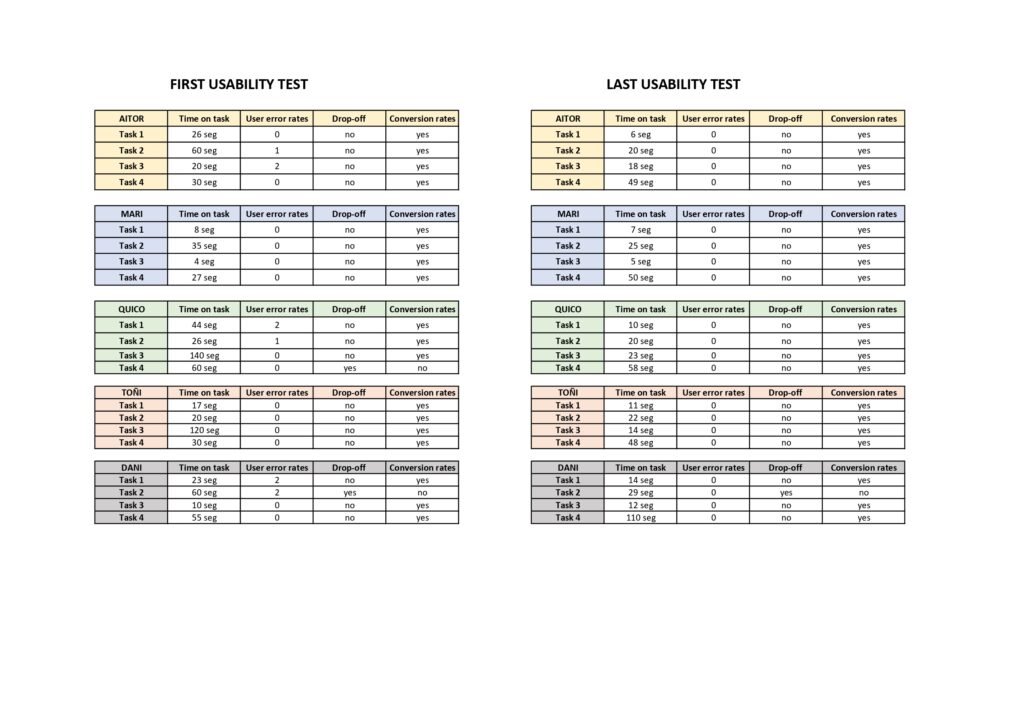
Several users were asked to complete a series of tasks in order to identify potential difficulties. Their reactions were analyzed, along with the time they took to complete each task, whether they finished them, and how many mistakes they made.
The first task was to check the work history.
The second task was to find on which days «AIDA» (a play) was being performed.
The third task was to check if there were any shows available for the third week of February.
The fourth task was to book two seats for the play «Un cuento perfecto«.
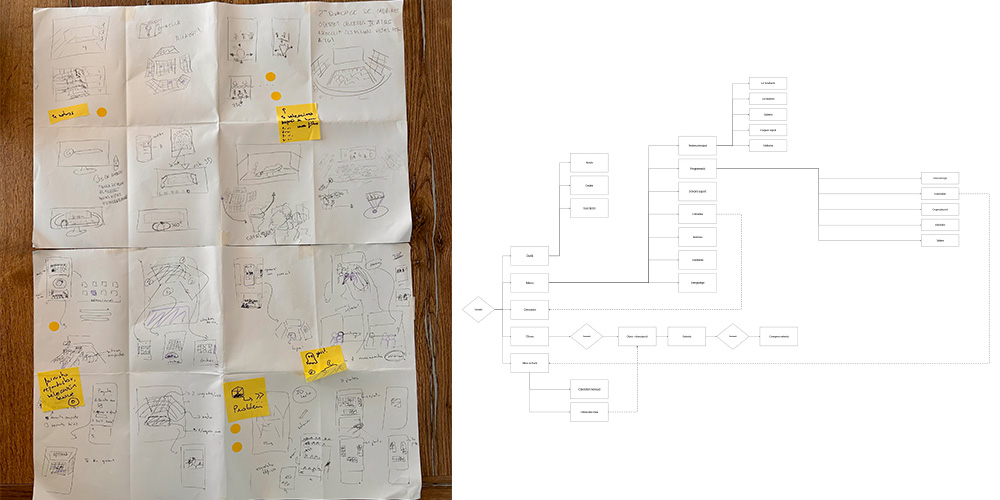
Yellow gomets indicate the place users needed to go.
Blue notes indicate when users were unable to complete the task.
Green notes mark significant problems experienced by the users.
Below are the results: first, from the initial round of feedback, followed by the results of the final round and the improvements observed.
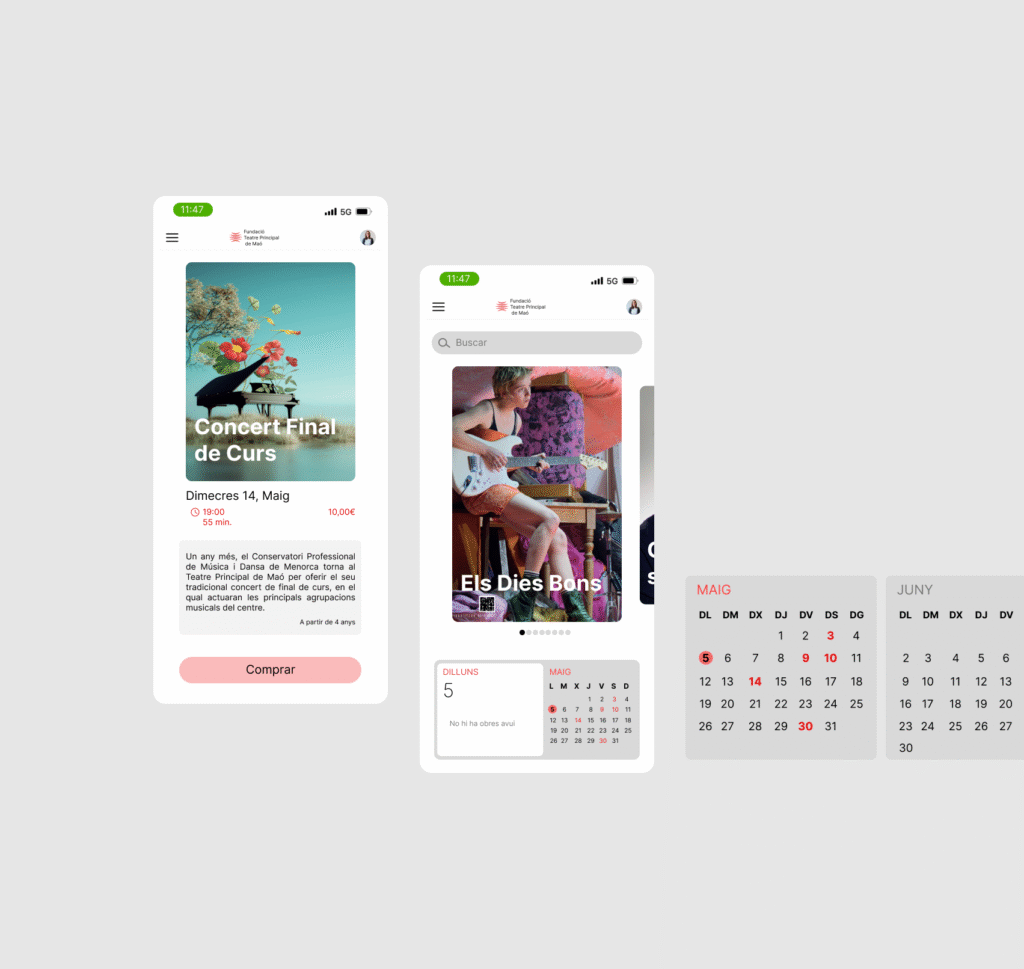
The results, after several rounds of feedback and improvements, showed that all tasks were completed without errors, following simple paths. All of them showed a reduction in completion time, except for the final task, where most users took longer.
Nevertheless, the comments received during the study reflected interest, curiosity, and enjoyment while performing the task.